
Pregnancy, Identity, and the Shifting Self
In seasons of change, it’s normal to feel like a different version of yourself. This post offers comfort, perspective, and reflection prompts for anyone navigating identity shifts — big or small.
Change has a way of cracking us open, even when it’s beautiful, long-awaited, or deeply meaningful.
We tend to think that only painful transitions bring discomfort. But growth — even the kind rooted in joy — can feel raw and uncertain too.
Because change, no matter how positive, asks something of us. It asks us to let go. To release the known. To stretch into unfamiliar space.
Lately, I’ve been sitting with questions that don’t always have tidy answers:
Who am I becoming?
Will I still recognise myself after this shift?
Am I allowed to feel both grateful and grief-stricken at the same time?
We don't often talk about this duality: the way becoming someone new often includes grieving who we were. Even when that past version no longer fits, even when the new chapter is something we want or chose.
But it’s there. The ache, the tenderness, the moment where you look in the mirror and feel like parts of you are slipping through your fingers while others are quietly taking form.
Change doesn’t mean something is wrong
We’re allowed to outgrow versions of ourselves — identities we’ve built, roles we’ve claimed, routines we’ve clung to. Even the ones that once felt like home.
There’s no shame in feeling disoriented when those versions start to fall away.
It doesn’t mean you’re lost.
It doesn’t mean you’ve made a mistake.
It just means you’re evolving.
Sometimes change feels like a quiet undoing — not dramatic, but persistent. Like you’re shedding skin slowly, and you don’t yet know what’s underneath.
That’s okay.
You don’t need to rush to ‘figure it out’
There’s so much pressure to be clear, certain, and confident about who we are — especially when others are watching, asking, or expecting.
But identity doesn’t always move in straight lines.
It spirals. It circles back. It reshapes itself through lived experience.
If you’re in a season where the edges of your identity feel soft or blurry — trust that there’s wisdom in the waiting.
You don’t need to force clarity before it’s ready.
You don’t need to rush to define your “next self.”
What if this version — the one in between the old and the new — is already worthy of love?
What if this is the version that needs your compassion most?
Let yourself take up space in the transition. Let the becoming be messy, sacred, and slow.
Gentle prompts for reflection
You don’t need to journal perfectly or find a profound answer. But if it feels nourishing, here are a few questions to sit with:
Who am I when I let go of others’ expectations?
What parts of me are asking to be seen, softened, or redefined?
What have I outgrown — not with shame, but with quiet honesty?
What do I want to carry forward from who I’ve been?
What version of me is emerging — even if I don’t have the words for her yet?
Let this be a conversation with your inner self, not an interrogation. There’s no finish line to rush toward — only moments to meet yourself again and again.
You don’t have to have it all figured out to trust yourself.
You don’t need to “become” someone else to belong to your life.
You're still you — even if you're shifting.
Even if you're softening.
Even if you're not quite sure where you land next.
And that, in itself, is a powerful kind of knowing.

How to Rebuild Confidence After Feeling ‘Off’
Feeling off lately? Confidence dips are totally normal. In this post, I share how to gently rebuild self-trust with practical tools, affirmations, and a mindset shift that actually works.
We all go through seasons where confidence feels far away — where we question ourselves, feel stuck, or just… not like ourselves.
Whether it’s after burnout, a life change, or simply a string of off days, that dip in self-trust can feel frustrating. But here’s the thing: confidence isn’t a constant state. It ebbs and flows. And that doesn’t mean you’ve lost it — it just means you’re human.
Start small – confidence loves evidence
The quickest way to rebuild confidence isn’t by waiting to feel it first, it’s by doing something small that reminds you of your strength.
That could look like:
Moving your body, even for 5 minutes
Saying no when it’s easier to say yes
Taking action before you're “ready”
Speaking kindly to yourself on purpose
Each time you show up for yourself, you collect proof that you're capable. And those small moments? They build the kind of confidence that sticks.
Try this affirmation practice:
Affirmations work best when they feel real. Here’s one I return to when I’m feeling unsure:
“I’ve done hard things before. I can do this too.”
Repeat it out loud or in your head, especially when self-doubt sneaks in. Say it while walking, journaling, or holding a power pose. It’s not about pretending everything’s perfect — it’s about anchoring yourself in truth.
Let yourself evolve
Sometimes, we feel off because we’re outgrowing old versions of ourselves. Confidence doesn’t always come from returning to who we were - it often comes from getting to know who we’re becoming.
That’s something to honour, not fear.
Confidence isn’t about being loud, certain, or always “on.”
It’s about trusting yourself enough to keep showing up — even when you’re not sure how it’ll go.
You’ve got this. Even on the wobbly days.

When Rest Isn’t Lazy – It’s Powerful!
We’re conditioned to glorify busy, but what if true strength lies in slowing down?
In this post, I explore the quiet power of rest, why it isn’t lazy, and how you can start honouring it—guilt-free.
We live in a world that celebrates hustle, productivity, and constantly doing more. And while there’s nothing wrong with ambition or goals, there’s something deeply nourishing – even radical – about choosing rest.
Not the kind of rest that’s sandwiched between tasks or squeezed into a day because we’re too exhausted to continue… but real, intentional, powerful rest. The kind that says, “I am worthy, even when I’m not doing.”
Rest is not weakness
For so many of us, especially women, rest has been tangled up with guilt.
We’ve been taught to earn it, to justify it, or to make it ‘productive’ – like ticking off a wellness to-do list. But real rest doesn’t need to be earned. It’s a basic need, a cycle we’re meant to honour.
I’ve been thinking a lot lately about what it means to slow down.
Not just in terms of movement, but in my inner world. The pace of my breath, the weight of expectations, the endless “shoulds” that sneak into even the quietest moments.
Here’s what I’ve learned:
You don’t need to prove your worth through exhaustion.
You don’t need to do more to deserve a break.
You don’t need to wait until burnout to finally stop.
Rest can be:
Saying no without guilt
Taking a nap in the middle of the day
Lying on the floor and breathing
Logging off, turning inward
Doing nothing – and letting that be enough
Try this: a 2-minute breath + body softening practice
Wherever you are, take a moment to pause.
Let your shoulders drop.
Loosen your jaw.
Feel your breath move through your body – slow, steady, soft.
With every exhale, imagine your body sinking just a little more.
There’s nowhere to go. Nothing to fix.
This moment is enough.
Remember:
You are allowed to rest.
You are allowed to not explain why.
And that rest, that pause, might just be the most powerful thing you do today.

5 Simple Mindfulness Practices to Start Your Day Right
Starting your day with a few minutes of mindfulness can set a positive, calm tone for whatever lies ahead. The great thing about mindfulness is that it doesn’t have to be complicated or take much time - small, simple practices can make a big difference in how you feel and respond throughout your day. Here are five easy mindfulness exercises you can incorporate into your morning routine to boost focus, reduce stress, and start the day with a clear mind.
Starting your day with a few minutes of mindfulness can set a positive, calm tone for whatever lies ahead. The great thing about mindfulness is that it doesn’t have to be complicated or take much time - small, simple practices can make a big difference in how you feel and respond throughout your day. Here are five easy mindfulness exercises you can incorporate into your morning routine to boost focus, reduce stress, and start the day with a clear mind.
1. Mindful Breathing
Mindful breathing is a quick, easy way to centre yourself and bring awareness to the present moment. This practice helps you start your day feeling calm and grounded, and it only takes a few minutes.
How to Do It: after waking up, sit comfortably with your eyes closed. Take a deep inhale, noticing how the breath fills your lungs. Exhale slowly, paying attention to the feeling of the breath leaving your body. Try to focus solely on the sensation of breathing.
How Long: just 2-5 minutes. Start with a few breaths, and if it feels good, keep going.
2. Body Scan
A body scan is an excellent way to connect with how you’re feeling physically and release any tension you might be holding. This practice brings your mind fully into your body and can help you feel present and awake.
How to Do It: sit or lie down comfortably. Starting at your head, slowly move your attention down through your body, noticing any tension or sensations in each area. Pause and breathe into any spots that feel tight, letting them soften and relax.
How Long: around 5 minutes, moving from head to toes.
3. Mindful Sipping
Turn your morning coffee, tea, or water into a moment of mindful connection. Rather than drinking on autopilot, this practice invites you to fully experience each sip.
How to Do It: hold your cup, feel its warmth, and take in the aroma. Take a slow sip, paying close attention to the taste, temperature, and texture. Enjoy each sip with full awareness.
How Long: this can be as quick as a single, mindful sip or as long as the entire drink. Focus on being present.
4. Gratitude Journaling
Practicing gratitude can boost your mood and help you start your day with positivity. This exercise brings attention to what’s good in your life, big or small, and encourages a positive mindset.
How to Do It: in a notebook or journal, write down 3-5 things you’re grateful for. They can be as simple as “sunshine” or as specific as “a great conversation with a friend yesterday.” Focus on feeling genuine appreciation for each one.
How Long: just 3-5 minutes. Let yourself smile as you write.

5. Setting an Intention
Setting an intention for your day is a mindful way to guide your thoughts and actions. It can be a single word, like “patience” or “focus,” or a phrase like “I will approach today with kindness.”
How to Do It: take a few quiet breaths and ask yourself how you want to feel or what you want to focus on today. When an intention comes to mind, hold it close, or repeat it to yourself.
How Long: 1-2 minutes. If it resonates, write it down somewhere you’ll see it throughout the day.
Tips for Making These Practices a Habit
Keep it Short & Simple: start with just one or two of these practices, especially if you’re new to mindfulness.
Consistency Over Intensity: a few mindful minutes each day can be transformative if done consistently.
Pair with Your Routine: attach a mindfulness practice to something you already do, like drinking your coffee or making your bed.
By taking a few mindful minutes each morning, you’re giving yourself the gift of presence and calm. These small steps create a foundation of peace and positivity, helping you feel more grounded, focused, and ready for whatever comes your way.

Somewhere along the way, life got loud.
You spend your days looking after everyone else, moving from one task to the next, always a little behind, always a little tired. You are good at holding it all together. But you have started to wonder when you last felt genuinely calm, present, and like yourself.
This workbook is the gentle way back.
Awaken Your Potential is an eight-week journey I created to help you come home to yourself, ten minutes at a time. No pressure, no perfection, no adding one more impossible thing to your day. Just a small, steady practice that slowly changes how you feel from the inside out.
“Well, if you had told me I was going to purchase an eBook and my life would LITERALLY be transformed, I never would have believed you. From being present in the moment, to self-love, to overcoming years of trauma, this is the eBook that changed my life.” Daniela L., 5 stars
How it works
Each week has one gentle theme, building on the last, so you are never overwhelmed and never lost. Inside every week you will find a focus for reflection, short visualisations, and small daily practices you can actually keep, plus journaling space and affirmations to carry with you. Week by week you move from relaxation, to motivation, to confidence, to consistency. You go at your own pace.
What you will walk away with
A calmer, clearer mind, and practical tools you can reach for on the hardest days. A kinder relationship with yourself. A daily practice that finally sticks, because it was built to fit a real, busy life. And a steady confidence that stays with you long after week eight.
“As someone with a hectic schedule, I have struggled to find time for mindfulness, but this has been a game-changer. I feel calmer, more present, and more centered, even on my busiest days.” Ilaria E., 5 stars
Why it is worth it
Eight weeks of guided practice comes to around £3.60 a week, less than a single coffee and cake, and far less than one drop-in class. Except this you keep forever, and return to whenever life gets loud again.
Designed to use on your tablet or phone, or print it out for a hands-on experience. This is a digital file for instant download, so you can begin the moment you feel ready.
Begin your eight weeks today. Your calmer, clearer self is closer than you think.
Please note: the printed copy shown in the photos is for display only and is not included in your purchase. This product is a digital file for instant download.

Introduction to Mindfulness: What It Is and How It Can Benefit You
But what exactly is mindfulness, and how can it benefit your mental and physical health? If you’re new to the concept, this beginner’s guide will help you understand mindfulness and how incorporating it into your routine can make a significant difference.
In a world that often feels chaotic and fast-paced, finding moments of calm can be challenging. Mindfulness offers a way to ground yourself and find peace amidst the hustle and bustle of daily life.
But what exactly is mindfulness, and how can it benefit your mental and physical health? If you’re new to the concept, this beginner’s guide will help you understand mindfulness and how incorporating it into your routine can make a significant difference.

What is Mindfulness?
At its core, mindfulness is the practice of paying attention to the present moment without judgment. It involves becoming fully aware of your thoughts, feelings, and sensations, as well as your surroundings, right here and now. Mindfulness encourages you to observe your experiences as they unfold, rather than getting caught up in past regrets or future anxieties.
While mindfulness has roots in ancient contemplative traditions, especially within Buddhism, it has become increasingly popular in modern wellness practices. Today, mindfulness is used not only for spiritual growth but also as a tool for enhancing overall well-being.

How to Practice Mindfulness
Practicing mindfulness doesn’t require any special equipment or a lot of time. Here are some simple ways to get started:
Mindful Breathing: focus on your breath. Pay attention to the sensation of air entering and leaving your body. If your mind wanders, gently bring your focus back to your breath.
Body Scan: sit or lie down comfortably. Slowly move your attention through different parts of your body, noticing any sensations or areas of tension without trying to change them.
Mindful Eating: eat slowly and savour each bite. Pay attention to the flavours, textures, and smells of your food. This can help you develop a more conscious relationship with eating.
Mindful Walking: take a walk and notice the sensation of your feet touching the ground, the sounds around you, and the sights you encounter. Stay present with each step you take.
Benefits of Mindfulness
Integrating mindfulness into your daily life can lead to a variety of mental and physical health benefits:
Reduced Stress: mindfulness can help you manage stress more effectively by encouraging a focus on the present moment, which reduces the impact of stressors.
Improved Focus: regular mindfulness practice can enhance your concentration and attention span, helping you stay focused on tasks and improve productivity.
Better Emotional Regulation: by becoming more aware of your emotions, mindfulness helps you respond to them in a more balanced way, reducing instances of emotional reactivity.
Enhanced Self-Awareness: mindfulness fosters a deeper understanding of yourself, including your thoughts, feelings, and behaviors. This self-awareness can lead to personal growth and improved relationships.
Improved Physical Health: studies have shown that mindfulness can lower blood pressure, improve sleep, and boost the immune system. By reducing stress, mindfulness also helps in managing chronic pain and other health conditions.
Greater Overall Well-Being: mindfulness can contribute to a greater sense of well-being and happiness by promoting a positive outlook and reducing feelings of anxiety and depression.
Getting Started with Mindfulness
Starting a mindfulness practice doesn’t have to be overwhelming. Begin with just a few minutes each day, and gradually increase the time as you become more comfortable. There are also many resources available, including apps, books, and online courses, to help guide you on your mindfulness journey.
Remember, mindfulness is a skill that develops with practice. Be patient with yourself and approach your practice with an open mind and heart. Over time, you may find that mindfulness brings a new level of peace, clarity, and joy into your life.
So, why not give it a try? Embrace the present moment and discover the benefits of mindfulness for yourself.

Welcome May with Mindfulness & Fresh Intentions
The month of May brings warmer temperatures, blooming flowers and abound opportunities for renewal and growth. As we transition into this new and vibrant season, it's the perfect time to pause, get grounded, and set some uplifting intentions for the month ahead.
The month of May brings warmer temperatures, blooming flowers and abound opportunities for renewal and growth. As we transition into this new and vibrant season, it's the perfect time to pause, get grounded, and set some uplifting intentions for the month ahead.
While the start of a new calendar year often prompts people to make resolutions, you don't need to wait until January to reset your mindset. Each new month, week or even day provides a chance to wipe the slate clean and realign your focus.

Here are some tips to start May with a mindful spirit:
Connect with Your Breath Before jumping into your daily whirlwind of activity, spend a few minutes taking some deep, mindful breaths. This short breathing exercise helps you feel centered and present in the current moment rather than letting your mind linger on the past or worry about the future.
Reflect on What's Working (and What Isn't) Get quiet and check in with yourself. What's going well in your life right now that you'd like to continue or ramp up? Conversely, what habits, situations or mindsets aren't serving you that you may want to adjust or let go? The start of a new month is an opportune time to hit the reset button.
Set New Intentions With self-reflection out of the way, you can set fresh intentions from a more grounded, mindful place. Perhaps you'd like to intention to approach setbacks with more patience, nurture meaningful relationships, or devote more time to nourishing your mind and body. Find what resonates with your authentic self.
Write It Down & Put It Out There To solidify your intentions, try writing them down or speaking them out loud. You can even create a visual representation by writing them on sticky notes and placing them around your home or office. Having reminders reinforces your commitment.
Detail the Small Steps While focusing on the overarching feeling or achievement you want is important, the more you can break down your intention into small, actionable steps, the more successful you're likely to be. If your intention is to nurture your relationships better, plan out micro-actions like scheduling regular phone calls with friends or making a habit of putting your phone away during quality family time. Incremental practices make big intentions more attainable.
For example, if you set the intention to feel more energized, list out supporting habits like aiming for 8 hours of sleep each night, drinking more water throughout the day, taking a morning walk, or meal prepping healthy lunches. Having a specific pathway of small, consistent actions keeps your intentions from feeling lofty or unattainable.
Embrace a Mindful May As you immerse yourself in the cheerful vibes of May's beginnings, ground yourself through mindfulness practices and use this fresh start to establish intentions that will uplift your mind, body and spirit all month long!
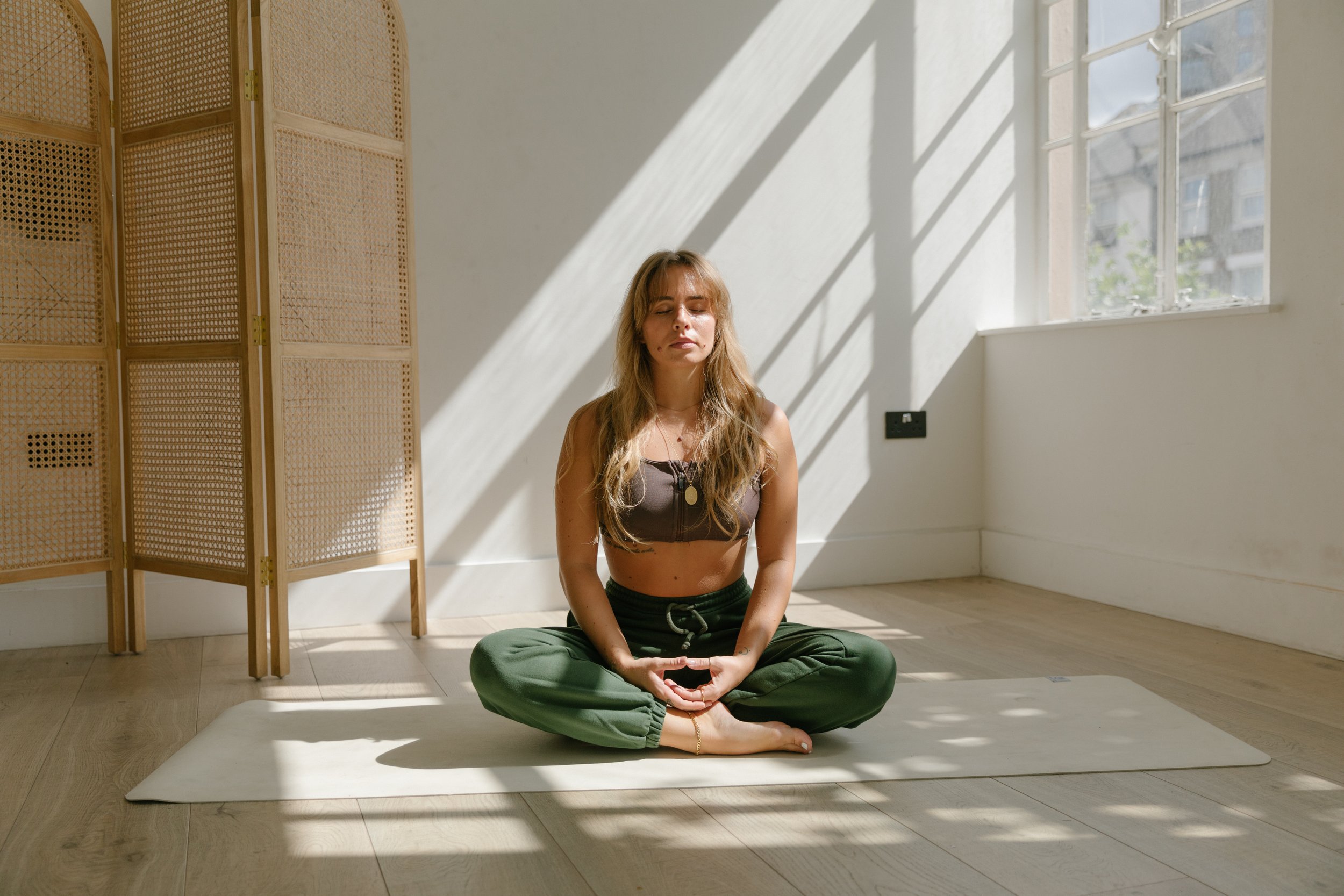
Guided Grounding Meditation for Inner Peace
In the hustle and bustle of our daily lives, finding a moment of peace can be a precious gift to ourselves. Amidst the chaos, taking time to ground our energy and reconnect with the present moment is essential for our overall well-being.
Today, I invite you on a journey within through a guided grounding meditation—a practice that can bring about a sense of calm, clarity, and inner peace.
In the hustle and bustle of our daily lives, finding a moment of peace can be a precious gift to ourselves. Amidst the chaos, taking time to ground our energy and reconnect with the present moment is essential for our overall well-being.
Today, I invite you on a journey within through a guided grounding meditation—a practice that can bring about a sense of calm, clarity, and inner peace.
Incorporating a guided grounding meditation into your routine can be a powerful tool for cultivating inner peace and resilience. By regularly reconnecting with the present moment and grounding your energy, you can navigate life's challenges with a greater sense of calm and clarity.
Remember, the journey within is an ongoing practice, and each session is an opportunity to nurture your mind, body, and spirit. Take this practice with you into your day, and may you find peace in the simplicity of being present.


Managing Holiday Stress and Self-Care
Discover practical self-care strategies to manage holiday stress and embrace the true spirit of the season. Learn to set boundaries, simplify gift-giving, and prioritize your well-being for a joyous and peaceful holiday experience.
Embrace the Joy of the Season by Prioritizing Your Well-being
The holiday season is often portrayed as a time of joy, love, and togetherness. While these sentiments hold true, the reality is that the holidays can also bring a fair share of stress and anxiety. The pressure to create the perfect celebrations, manage family dynamics, and stay on top of numerous tasks can easily become overwhelming. However, by practicing self-care, you can transform this chaotic time into one of genuine joy and inner peace.

Recognize the Stressors:
before delving into self-care strategies, it's essential to acknowledge the sources of holiday stress. Common stressors during this time may include:
1. Gift Shopping: Finding the perfect gifts for loved ones can be time-consuming and costly.
2. Family Expectations: balancing the expectations of various family members can be challenging.
3. Financial Pressure: the holidays often come with extra expenses, which can strain your budget.
4. Overcommitment: an abundance of social gatherings and events can lead to exhaustion.
5. Perfectionism: striving for the "perfect" holiday experience can create unnecessary stress.
Prioritize Self-Care:
To ensure your well-being during the holidays, make self-care a priority. Here are some effective strategies to help you manage holiday stress and embrace the season's true spirit:
1. Set Boundaries: learn to say no and establish clear boundaries to avoid overcommitting. It's okay to decline invitations and requests that may lead to overwhelm.
2. Practice Mindfulness: take time for mindfulness exercises, like deep breathing and meditation, to center yourself and reduce anxiety.
Find guided meditations and breathwork on my YouTube channel.
3. Simplify Gift-Giving: consider alternatives to traditional gift-giving, such as DIY gifts or setting spending limits. Focus on the thought and love behind the gifts rather than their cost.
4. Delegate Tasks: share the holiday workload with family members or friends. Hosting a holiday dinner, for example, doesn't have to fall solely on your shoulders.
5. Take Short Breaks: schedule short breaks to relax and recharge during busy days. Even a few minutes of stillness can make a significant difference.
6. Stay Active: physical activity can help reduce stress and improve your mood. Even a brisk walk or quick home workout can provide a much-needed energy boost.
A 20 minutes Full Body Flow can work wonders!
7. Connect with Loved Ones: reach out to friends and family for support and understanding. Share your feelings and concerns with those you trust.
8. Celebrate Your Achievements: don't strive for perfection. Instead, celebrate your accomplishments and the joy of the holiday season, no matter how big or small.
Make Self-Care a Tradition:
Holiday self-care doesn't have to be a one-time occurrence. Consider making it a holiday tradition that you look forward to each year. You can even involve your loved ones in these self-care practices, promoting a healthier and happier holiday experience for all.
In conclusion, managing holiday stress and practicing self-care is essential for a joyous and peaceful holiday season. By setting boundaries, simplifying your approach, and prioritizing self-care, you can truly embrace the spirit of the holidays while taking care of your well-being. Remember, the holidays are about love, gratitude, and togetherness, and self-care plays a crucial role in achieving that.
May your holidays be filled with warmth, love, and the serenity that comes from caring for yourself.
Sign up for upcoming self-care events:
