Barre, Explained: What It Actually Is and Why Your Body Will Love It
“Barre” gets pictured as ballerinas in pink, gracefully doing very little. Let me clear that up: barre will have your legs shaking within minutes, and you’ll love it more than you’d expect.
So what is it, really? Barre is a blend: a little ballet, a little Pilates, a little strength training and yoga, stitched together into one flowing workout. You use small, controlled movements and hold positions to the point where your muscles genuinely fatigue. That trembling in your thighs? That’s the work happening. That’s where change begins.
Here’s why your body will thank you:
It builds strength without strain. Barre works with your own bodyweight and small ranges of motion, so you get strong and toned without hammering your joints.
It targets the muscles that everyday life forgets. Deep glutes, inner thighs, the tiny stabilisers around your hips and core. Barre lights them all up, and those are exactly the muscles that keep you steady, upright and injury-free.
It’s for every body. You don’t need a dance background, and you certainly don’t need to be flexible. If you can stand near a wall or a chair, you can do barre.
It’s oddly joyful. We move to the beat of the music, and there’s something in that rhythm that makes hard work feel like play. You’ll be working incredibly hard and smiling at the same time, and that is the magic.
Come for the sculpting, stay for the way you feel afterwards: strong, energised, and a little bit proud of those shaking legs.
That is how I teach it: lower body, upper body, core and full body, all set to the music.
I am also building something of my own at the moment. An 8 week program for the postnatal season, and the first chapter of something bigger I will tell you about soon. If you would like to be first through the door, the waitlist is here: she-smiles.com/waitlist
Breathe First: Simple Breathing Practices for Anxious Days
When anxiety rises, we’re often told to “just breathe.” It’s well-meant, and also a little maddening, because in the moment, no one tells you how. So let me actually show you.
Your breath is the one part of your nervous system you can steer directly. Change how you breathe, and you send your body a message it can’t ignore: you’re safe, you can settle. Here are a few practices I come back to again and again.
The longer exhale. This is the simplest and, honestly, the most powerful. Breathe in for a count of four, and out for a count of six or more. The long exhale gently taps the brakes on your stress response. A minute of this can take the edge off a spiralling moment.
Box breathing. In for four, hold for four, out for four, hold for four. The steady, even rhythm gives a racing mind something simple to hold onto. Trace a square with your finger as you go if it helps.
Hand on heart, hand on belly. Rest one hand on your chest and one on your belly. Breathe so that the lower hand moves more than the upper one. This draws your breath low and deep, out of the shallow, chesty pattern that anxiety loves.
Sigh it out. Take a big breath in through the nose, then a second little sip of air on top, and let it all go with an audible sigh through the mouth. Two or three of these can reset your whole system in seconds.
None of these make hard feelings disappear, and that’s not the aim. What they do is give you an anchor, something steady to return to when everything else feels fast and loud. Your breath is always with you. On the anxious days, let it go first.
If you’re struggling with anxiety, please be gentle with yourself, and reach out to a doctor or a professional for support when you need it. These practices are a companion, not a cure.
If your days have felt like a lot lately, the Start-Again Kit is my free, gentle way back in: she-smiles.com/subscribe
And if you are breathing your way through the early weeks of motherhood, I am building something for you at the moment. An 8 week program, made for exactly that season. The waitlist is open here: she-smiles.com/waitlist
Five Minutes Is Enough: Tiny Practices for Busy Days
We tend to think of movement as something that needs an hour, a plan, and the perfect conditions. So on the days we don’t have those things - which is most days - we do nothing at all.
I’d love to offer you a different idea: five minutes is enough. Not enough to transform your body overnight, but enough to change how you feel right now. And “right now” is where a real practice lives.
Here are a few of my favourite small resets. Pick one. You don’t need to change your clothes or find your mat.
✨ One minute of breath. Sit or stand, and make your exhale longer than your inhale - in for four, out for six. Do it ten times. Your nervous system reads a long exhale as safety, and it will start to settle.
✨ A doorway chest opener. Rest your forearms on either side of a doorframe and step gently through it. Thirty seconds here undoes a surprising amount of desk-hunch.
✨ Standing forward fold. Let your upper body hang towards the floor, knees soft, head heavy. Sway a little. Feel your back release and your mind follow.
✨ A single sun salutation. If you know one, move through it slowly, once, with your breath. One round done with attention is worth more than twenty done in a rush.
The point of these isn’t to replace a longer practice, it’s to keep the thread alive on the days when longer isn’t possible. Because consistency isn’t about doing a lot. It’s about not disappearing completely.
Five minutes today. That’s a practice. That counts.
If five minutes is where you are right now, I made something for exactly that. The Start-Again Kit is my free, no-pressure way back to movement, and you can have it here: she-smiles.com/subscribe
Yoga Isn’t About Touching Your Toes
There’s a sentence I hear more than almost any other: “Oh, I can’t do yoga, I’m not flexible.” And every time, I want to let that person off the hook, because it’s built on a myth I know from the inside out.
I grew up doing gymnastics and ballet. I could touch my toes before I could spell my own name. So when I came to yoga in 2016, flexibility wasn’t the thing I was missing, I arrived with plenty of it. And that’s exactly how I learned that being bendy was never the point.
Because with all that flexibility, I still couldn’t settle my mind. I could fold myself in half and feel more wound-up than ever. What kept me coming back to the mat wasn’t a deeper stretch, it was the way I felt afterwards: calmer, steadier, more at home in myself. The flexibility I already had turned out to be the least interesting thing I brought with me.
So let me tell you what yoga is actually about, from someone who started at the “bendy” end and found the real gift somewhere else entirely.
Noticing. Most of us move through the day on autopilot. Yoga is a rare hour where you’re invited to feel your own body: where it’s tense, where it’s tired, where it asks you to slow down.
Breathing. When life speeds up, the breath is the first thing to go shallow. Learning to lengthen your exhale on the mat is a skill you carry into the difficult conversation, the sleepless night, the moment you’d usually snap.
Coming back. Your mind will wander a hundred times in a class. Gently returning your attention - without the telling-off - is the whole practice. Not staying focused. Coming back.
Flexibility, if you want it, will come. But it’s a side effect, not the destination. You can touch your toes and miss the point entirely, or never reach them and understand yoga completely.
So if you’ve been waiting until you’re “bendy enough,” please stop waiting. Come exactly as you are. The toes were never the test.
move with me on Youtube - new class coming out every Sunday!
Start Where You Are: A Gentle Guide to Your First Yoga Practice
If you’ve been thinking about trying yoga but keep putting it off, this one’s for you.
I hear the same worries all the time. I’m not flexible. I won’t know what I’m doing. Everyone else will be better than me. I understand every single one, and I promise you, none of them are reasons to stay away. They’re just the nerves that show up before anything new and good.
Here’s what a first practice actually asks of you: a bit of floor space, something comfortable to wear, and the willingness to feel a little unsure for a while. That’s it. You don’t need special leggings, a fancy mat, or a bendy body. You need to show up as you are today.
When you begin, forget about doing the poses “right.” Instead, notice what you feel. Where does your breath sit - high in your chest, or low in your belly? Where does your body hold on, and where does it soften when you let it? This noticing is the real practice. The shapes are simply a way of paying attention.
Start small. Ten minutes is a beautiful place to begin. Roll out your mat, take a few slow breaths, move gently, and finish lying down for a moment of stillness. Do that a few times a week and something shifts, not because you’ve mastered anything, but because you’ve started listening.
And if your mind wanders, or you wobble, or you have absolutely no idea what your body is doing? Wonderful. That means you’re a beginner, and being a beginner is one of the most generous things you can give yourself.
Come and start where you are. I’ll meet you there.
Ready to begin? I have a library of different yoga classes on YouTube and more to come, let’s move together!

Pregnancy Isn’t a Pause - It’s a Remix
Pregnancy doesn’t pause your life, it shifts it. A reflection on how movement, identity, and strength evolve when you stop chasing your old self and start remixing what’s already inside you.
Before I got pregnant, I worried that this season would put everything on hold.
My body.
My creativity.
My movement practice.
My identity.
I thought: Will I still feel like me?
The answer turned out to be yes - but in a way I didn’t expect.
Pregnancy didn’t press pause. It just changed the rhythm.
Some movements slowed down. Some got softer.
Some disappeared entirely.
But I didn’t stop moving. I just started moving differently.
I stopped chasing the fire and started honouring the spark.
I swapped performance for presence.
I traded structure for instinct.
And instead of feeling like I was “losing” the old version of myself…
I realised I was expanding.
Pregnancy isn’t a full stop, it’s a remix.
It’s a new version of an old song. One that still carries my voice.
Just with a different tempo, new lyrics, and maybe a few unexpected harmonies.
This season has reminded me that I can adapt without losing who I am.
That softness and strength can live side by side.
That letting go of certain things doesn’t mean letting go of me.
So if you're in a season of change - pregnancy, recovery, burnout, identity shifts - this is your reminder:
you don’t have to go back to who you were.
You can remix your way forward.

The Myth of the Perfect Practice: Why Repetition is Revolutionary
Movement doesn’t have to be new to be meaningful. Here’s why repetition is one of the most powerful tools in any practice.
There’s a pressure, especially in the online movement world, to constantly change things up.
New flows. New challenges. New goals.
It’s as if growth only happens when we’re doing something new.
But the truth is: some of the deepest shifts I’ve ever experienced came from doing the same thing again and again.
The same pulse in barre.
The same spinal roll-down in yoga.
The same walk around the block, every afternoon.
Not because I was chasing perfection, but because I was building presence!
Repetition isn’t boring.
It’s anchoring.
It’s how the nervous system learns safety, how strength is layered in, and how your body starts to feel like home, not a project to fix.
Through pregnancy, I’ve come back to the same movements over and over. Some days they feel powerful. Some days I struggle. But each time, I meet myself with a little more compassion. A little more trust. A little less pressure to get it “right.”
The magic of repetition is that it meets you exactly where you are - and it’s still useful.
No performance required.
No outcome needed.
Just presence.
If you’ve been stuck in the loop of needing every practice to be exciting or different, consider this your permission slip to repeat.
To return.
To move like you’re layering kindness into your body with every breath.
That’s where the real growth lives.
Not in novelty, but in noticing.

What Happens When Movement Becomes a Conversation, Not a Command
What if movement wasn’t something you forced, but something you felt? A reflection on how tuning in - instead of pushing through - can transform your entire practice.
There’s a moment in practice - sometimes quiet, sometimes dramatic - when movement stops being something we do to our bodies and starts being something we do with them.
It’s the difference between:
“Do this, now.”
and
“Hey… what do you need today?”
For years, I approached movement with structure and discipline. And to be honest, I still love a well-planned flow or a spicy barre sequence. But something shifted - especially through pregnancy - when I realised my body was already in a conversation. One I could tune into, or talk over.
When movement is a conversation, I pause more. I notice what feels expansive or crunchy. I play with tempo. I let myself swap a plank for a breath. I let go of the “should” voice, and let my body guide the rhythm.
It doesn’t mean I move less. It means I move better.
More intuitively. More respectfully. More like me.
This approach isn’t just for pregnancy, or healing, or slower seasons - though it’s especially powerful in those. It’s for anyone who’s tired of treating movement like a checklist, and ready to experience it as something more alive.
So here’s an invitation: next time you step onto your mat, or into a walk, or into your body in any way… don’t just do.
Ask.
Listen.
Move with your body, not against it.
Because some of the most powerful practices aren’t the ones that push you.
They’re the ones that meet you.
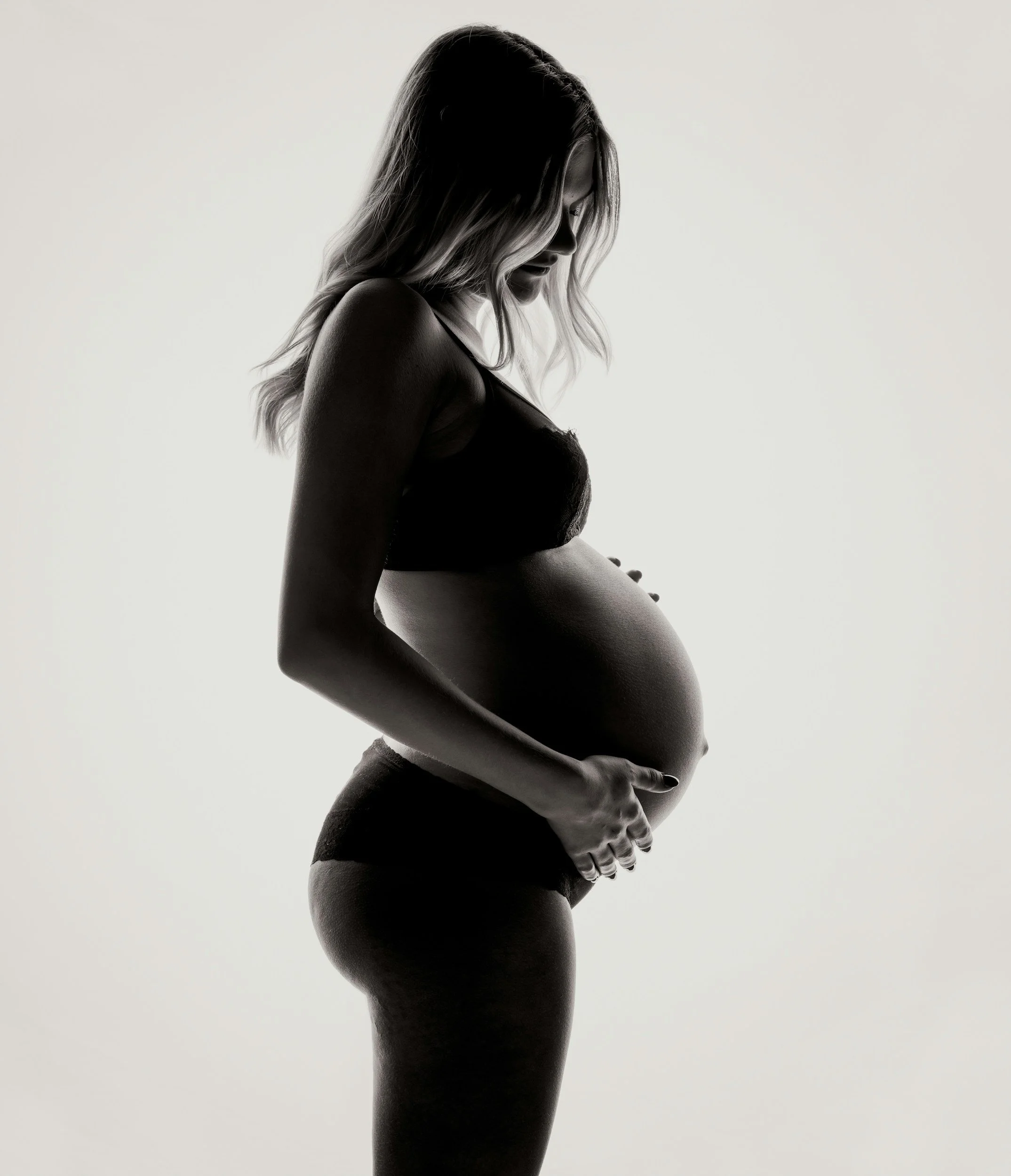
Movement in Pregnancy: What I’m Actually Doing (and Skipping)
Pregnancy doesn’t mean giving up movement - it means listening. In this post, I share what I’m still doing, what I’ve let go of, and how I’m approaching strength in a softer season.
Pregnancy changes a lot - not just physically, but mentally, emotionally, and yes, in how I move.
Before getting pregnant, I honestly expected I’d have to slow way down. I’d heard all the cautionary advice. I’d seen the overly simplified “gentle stretching only” suggestions. And I had this idea that I’d need to completely shift into a soft, delicate version of my movement practice.
But the truth?
So far I haven’t had to give up as much as I thought.
I’ve just had to get more intentional. More tuned in. More willing to adapt - not because I’m fragile, but because I’m listening.
So I thought I’d share what my movement looks like right now, in real-time, as someone who was already active before pregnancy, who still loves feeling strong, and who’s learning to soften without stopping.
What I’m still doing (and loving)
✅ Yoga — with modifications
I’ve kept up a steady yoga practice throughout my pregnancy, focusing on mobility, grounding, and breath. I skip deep backbends (just because they don’t feel good for me) and long belly-down holds, but otherwise? Yoga has been a lifeline. Especially for connecting to my breath and calming my nervous system.
✅ Barre & Strength — in lower impact ways
I’ve continued teaching and doing barre, with a few pregnancy-friendly swaps (hello, chair support and elevated planks). I avoid deep abdominal compression and long supine work, but I’m still working my glutes, arms, and core in safe and empowering ways.
✅ Walking — everyday
Walking has been such a grounding practice — especially on days when I don’t feel up for anything structured. I don’t track it, I don’t rush it. I just walk for fresh air, headspace, and a bit of movement through my hips. Always with my furry companion Nala of course!
✅ Breathwork — intentional
It’s all about gentle, intentional breathwork. Long exhales. Soft belly breathing. Anything that supports my pelvic floor and nervous system, especially in moments of overwhelm.
What I’ve let go of (for now)
❌ Lying on my belly
Even before it became physically impossible, I stopped spending time in prone positions. It just didn’t feel good anymore — and I realised how many other options there are to strengthen or stretch without needing to go face-down.
❌ High-impact cardio or jumping
This one wasn’t a hard no at first — I just naturally moved away from it. I love a strong, low-impact burn that still makes me feel powerful but doesn’t jar my joints or overstimulate my body.
❌ Forcing movement when I’m exhausted
This has been the hardest — but most important — shift. Instead of pushing through fatigue, I’ve learned to honour it. If I need a nap instead of a workout, that is the practice. That is the strength
🔄 Rethinking core work — not avoiding it
I haven’t stopped working on my core — far from it. But I’ve shifted how I do it.
Instead of crunches or intense leg lifts, I’m focusing on deep core connection: breath-led engagement, pelvic floor awareness, postural strength, and modified side planks. These help me feel supported, stable, and connected to my body — without unnecessary strain or pressure.
Everyone’s pregnancy is different, so what’s right for one person might be different for another. I’m working with what feels best in my body, guided by both research and intuition.
What’s guiding me right now
My movement isn’t about maintaining what I used to do.
It’s about staying connected to my body — not out of fear of losing it, but out of respect for what it’s doing.
I’ve never been more in awe of how much energy and intelligence my body holds.
And the more I trust it, the easier it is to move in ways that feel both powerful and kind.
If you’re navigating pregnancy and wondering how to move — know this:
there’s no one right way.
Some days you’ll feel strong. Some days you’ll need stillness.
And all of it counts.
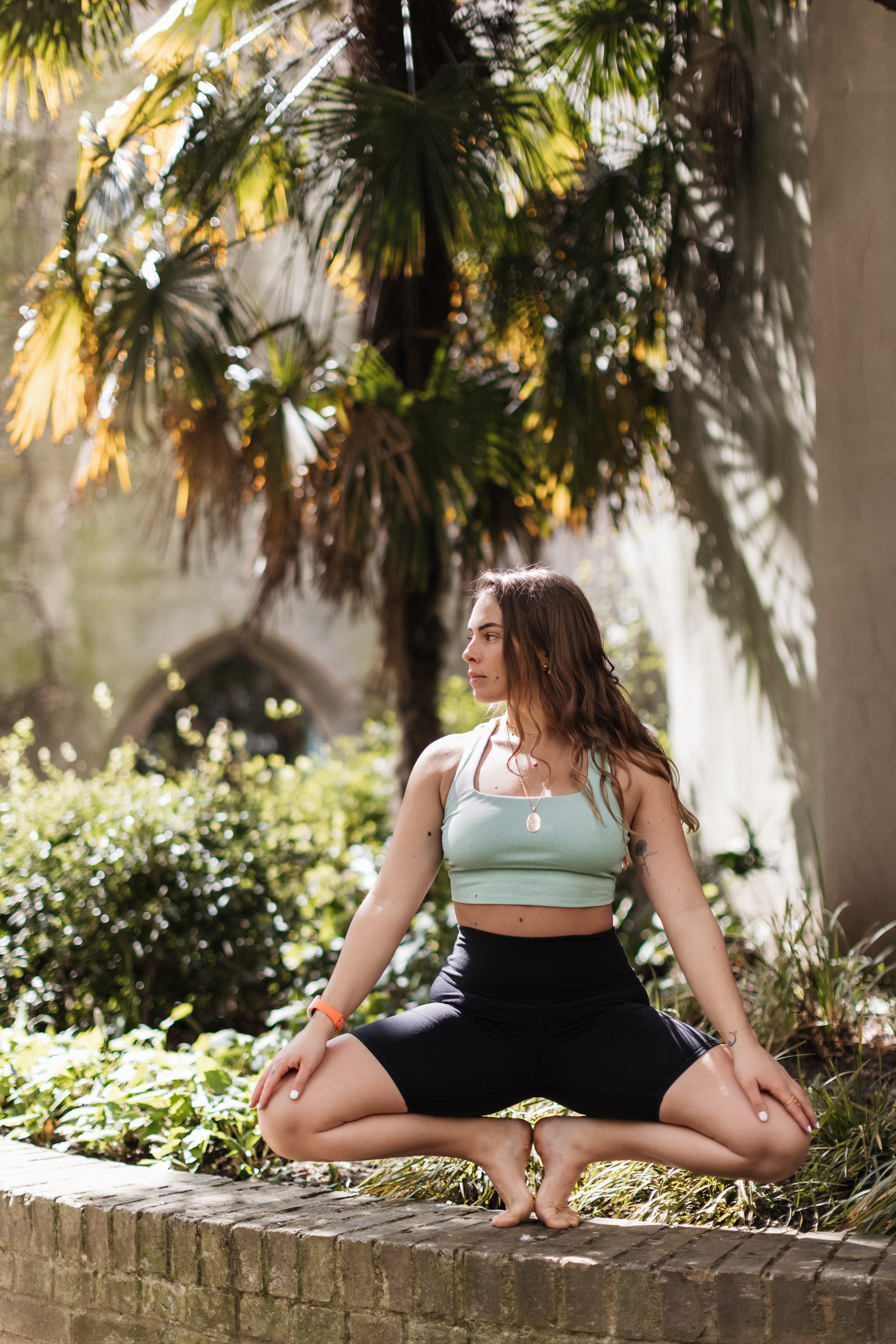
5 Things to Do for Tight Hips (That Aren’t Just Stretching)
Tight hips aren’t just a flexibility issue - they’re often the result of how we move (or don’t) in daily life. In this post, I share five powerful and practical ways to release hip tension through strength, mobility, posture awareness, and even a little bit of dancing. Whether you’re always seated or simply feeling stuck in your body, this guide will help you unlock more freedom in your hips - no deep stretches required.
We’ve all felt that familiar hip tightness—whether it shows up after long hours at your desk, a heavy workout, or just from life in general. But here’s the thing: tight hips aren’t just about flexibility. They’re a reflection of how you move (or don’t move) throughout the day.
Most of us spend our lives in straight lines—we sit, we walk, we stand. But our hips were designed for multi-directional movement, strength, and fluidity. In this post, I’m sharing a more holistic approach: five things to do for your hips that go beyond stretching—and why each of them really works.
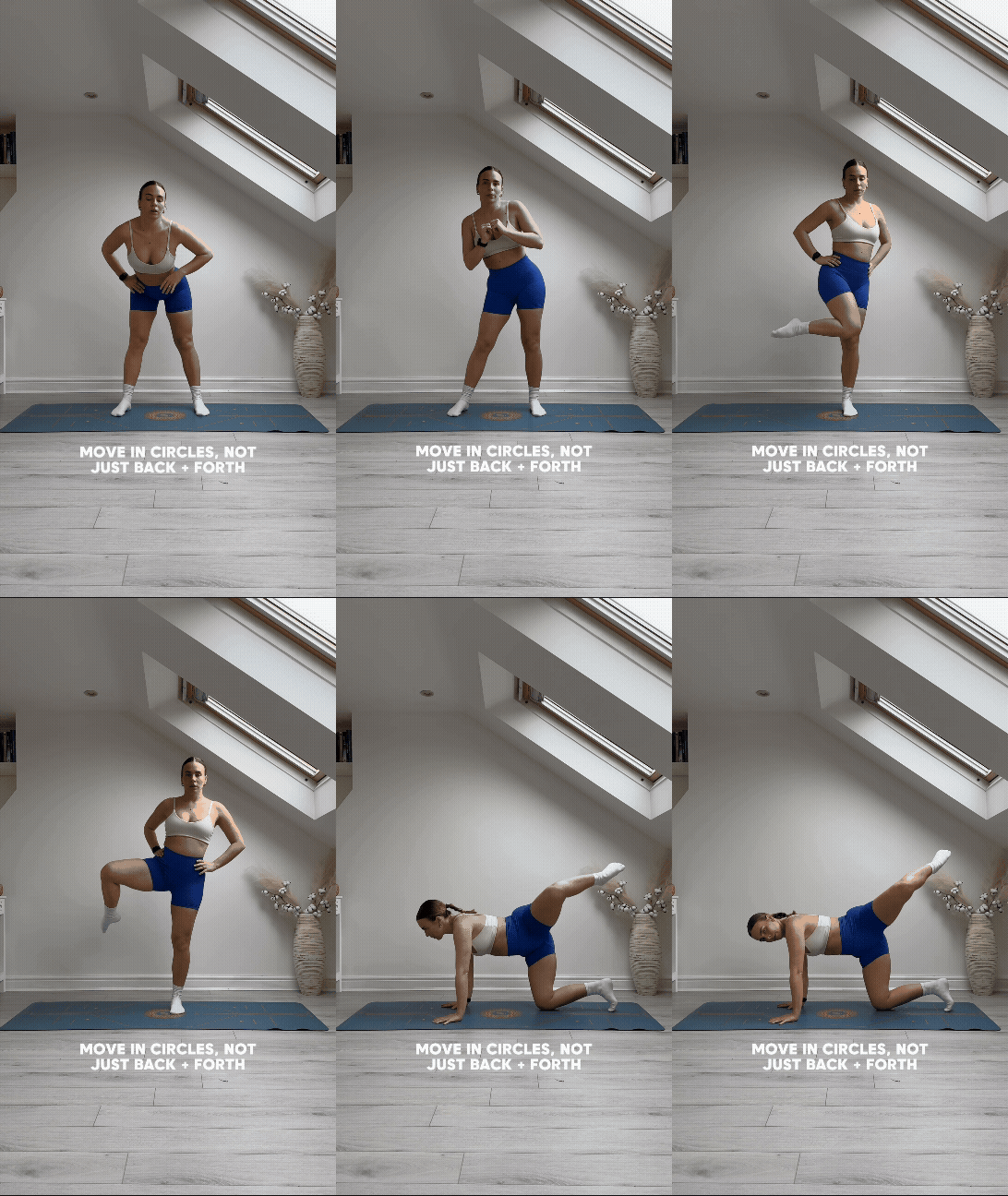
1. Move in Circles, Not Just Back and Forth 🔄
Most daily movement happens in one plane: forward and back. But your hips are ball-and-socket joints—they love rotation, spirals, figure 8s. When we skip circular movement, stiffness builds up and the joint loses its full capacity.
Try this:
Hip CARs (Controlled Articular Rotations) help strengthen and mobilise through your full range of motion.
Seated or standing hip circles are great for daily mobility and waking up sleepy hips.
Why it matters: Circular movement improves joint lubrication, neuromuscular control, and reminds your hips what they’re actually capable of.
2. Strengthen What’s Weak 💪
Here’s the secret: tight hips often point to underactive glutes and core stabilisers. Without strength, the body compensates by clenching or limiting movement in the hips. Instead of just stretching more, you need to build the internal support system.
Try this:
Banded Clamshells to activate the outer glutes and improve hip stability.
Glute Bridges to strengthen your posterior chain and relieve hip and lower back pressure.
Clamshell Form Tip:
Lie on your side with knees bent and feet together. Keep your hips stacked (don’t let them roll back!) and lift the top knee only as high as you can without losing alignment. Control is key.
Why it matters: When you strengthen the right muscles, your hips feel more supported and free to move.

3. Unstick Your Hip Flexors with Active Work 🔥
Instead of sinking into deep stretches and hoping for the best, try active mobility—engaging the muscles around your hips to build control as you release tension.
Try this:
Low lunge with glute engagement: In your lunge, squeeze your back glute and gently hover the back knee off the floor for a few seconds.
Repeat 3–5 times, focusing on slow and steady movement.
Why it matters: This teaches your body to release tension through activation, not force. The result? More functional flexibility and stronger hips.

4. Check Your Sitting Habits 🪑
The way we sit—especially for long periods—can directly lead to hip tightness. Most chairs position us in a way that shortens the hip flexors and weakens the glutes. One simple shift? Change how you sit during the day.
Try this:
Spend 5–10 minutes in floor-based positions like 90/90, butterfly, or cross-legged.
Sit tall and stay mindful of your alignment.
90/90 Form Tip:
Sit with one leg bent in front at 90° and the other behind you, also at 90°. Sit tall and square your hips. If you feel uneven or uncomfortable, place a cushion or block under your hips for support.
Why it matters: Floor-sitting gently encourages hip external and internal rotation, and helps rebalance the body from long hours in chairs.

5. Make It Fun: Dance, Shake, Flow! 💃
We often forget how much joyful movement can release tension. Hips respond beautifully to rhythm—whether it’s a free-flowing yoga sequence, a bit of swaying, or dancing in your kitchen.
Try this:
Add hip rolls, gentle sways, or figure 8s into your warm-ups or wind-downs.
Or just put on your favourite song and move however feels good.
Why it matters: Movement is medicine. When you shift from "fixing tightness" to exploring freedom, your hips naturally begin to open.

Tight hips don’t always need more stretching—they need a smarter approach. By focusing on strength, circular movement, active release, and joyful motion, you create space and support that actually lasts.
Think of this routine as a reset button for your lower body—something you can revisit anytime you’re feeling stiff, heavy, or stuck.
Give it a go this week and see how your hips respond. 💫

Yoga is for Every Body, Everywhere
On International Yoga Day, I’m celebrating the way yoga has held me through every season, especially this one.
Today is International Yoga Day, a beautiful invitation to pause and celebrate a practice that’s been with me through every version of myself.
From the very first time I rolled out a mat, unsure of how to breathe “right,” constantly comparing myself to the person next to me, wondering if I was doing it wrong - to now - moving slower, with a growing belly, a tender body, and a deep sense of awe for what it's carrying… yoga has held me.
It’s been there in seasons of energy and strength.
In seasons of softness, uncertainty, and change.
It’s been with me in bustling studios, in quiet corners of hotel rooms, in my London living room, and lately, on the floor, next to my dog, in pyjamas.
That’s the beauty of it.
Yoga doesn’t demand performance.
It doesn’t ask us to twist into pretzels or touch our toes to be valid.
It doesn’t care what you’re wearing, how long you’ve practised, or whether your flow looks like anyone else’s.
What it does ask is something both simple and radical:
Can you be with yourself, as you are, right now?
No need to fix. No need to prove. Just presence.
This year, that question has landed deeper than ever.
Pregnancy has invited me into a completely new relationship with my body. One that is constantly evolving, moment to moment. I’ve instinctively let go of things I once loved (deep backbends, fast-paced flows), and instead welcomed new ways of moving and connecting.
But what’s surprised me most is how yoga has expanded to meet me here.
It’s shown up in new shapes: breathwork that calms my nervous system when I feel overwhelmed. Gentle stretches that create space where I didn’t know I was holding.
Even in stillness, lying down with one hand on my belly and one on my heart, there it is. The practice.
And through it all, I’ve felt held by a truth I keep coming back to:
Yoga is not something we do. Yoga is how we are with ourselves.
So today, wherever you are - on a beach, in a busy city, in between tasks, or curled up at home - I hope you find a moment to breathe. To soften. To be with yourself.
Because yoga really is for every body, everywhere.
And that includes yours.
✨ Looking for a short practice to do today? Here’s one of my favourites, no equipment needed, just you, your breath, and your presence.

Creating Your Inner Safety Net
When life feels uncertain, the most powerful thing you can do is come home to yourself. This post explores how to build your inner safety net with softness, presence, and steady self-trust.
There are moments when life feels shaky - like everything is shifting under your feet and you’re not quite sure where to land.
And in those moments, it’s so easy to look outward.
For answers.
For reassurance.
For something or someone to make us feel OK again.
But what if you could create your own sense of safety?
Not because everything is certain - but because you know how to come home to yourself.
Safety isn’t just external — it’s internal
We often think of safety as something we have to secure - through routines, control, outcomes, or other people’s validation.
And while those things can absolutely offer support, they’re not always guaranteed.
Life can shift. Plans can change. People can leave.
So what then?
That’s where your inner safety net comes in: the practices, tools, and reminders that ground you when everything else feels uncertain.
So what does an inner safety net actually look like?
It’s different for everyone, but it might include things like:
A breath pattern that instantly grounds you
A phrase you return to when anxiety spikes
A simple practice that helps you feel back in your body
A person you trust to speak your truth to
A soft ritual that reminds you you’re safe - right here, right now
The power isn’t in having the perfect routine.
It’s in remembering you have your own back.
What’s been part of mine lately
These are some of the things I’ve been leaning on recently (especially as my body and life keep shifting in ways that are beautiful but also unknown):
Left hand over heart, right on belly. Close eyes. Breathe. Simple and immediate.
A reminder: “This isn’t forever. But I am still here.”
Warm showers, slow mornings, soft clothes. Anything that invites my nervous system to soften.
Letting myself cry without making it a problem. Just letting it move through.
A very specific playlist that feels like home. (And dancing, badly, in the kitchen.)
These aren’t fixes. They’re invitations back to myself.
📝 A few prompts to build your own safety net
Try writing or reflecting on these:
What helps me feel grounded when everything feels loud or fast?
When was the last time I felt safe in my body — what was happening?
What are 3 things I can do when I feel unsteady that don’t rely on anyone else?
What does “I’ve got me” look like in real life?
You don’t need to have it all figured out.
You just need one anchor, one reminder that you’re safe to be here.
Your safety doesn’t have to be built on certainty.
It can be built on self-trust, softness, and knowing how to return to yourself.
This isn’t about control.
It’s about connection.

The Art of Letting Go Before You’re Ready
Letting go doesn’t always feel empowering — sometimes it feels messy and uncertain. In this post, I explore what it means to release something before you’re fully ready, with tenderness and trust.
We often talk about letting go like it’s some grand, empowering declaration — a clean break, a deep exhale, a moment of clarity where we say "I’m done with this now" and walk confidently into what’s next.
But the truth?
Letting go is rarely that neat.
Sometimes it’s slow and reluctant.
Sometimes it’s a choice you make while still clinging to the very thing you’re trying to release.
Sometimes, letting go happens in whispers — not roars.
What if you don’t feel ready?
I’ve been sitting with this question a lot lately.
As I move through pregnancy, I can feel myself being asked — over and over again — to let go.
Let go of control.
Let go of timelines.
Let go of who I used to be.
Let go of the version of myself I thought I had to keep holding onto.
And I don’t always feel ready.
There’s still so much tenderness. So much uncertainty. So many parts of me that want to know exactly what comes next.
But letting go isn’t always about readiness.
Sometimes it’s about trust — trust that on the other side of release, there’s something softer waiting.
What we hold onto (and why)
We all hold onto things for a reason — even when they no longer serve us.
An old routine, a way of seeing ourselves, a relationship, a belief, a version of success we no longer relate to...
Letting go doesn’t just mean losing something — it often means losing the familiarity, safety, and identity we’ve built around it.
And that can feel scary.
So instead of letting go, we grip tighter.
Even when it’s heavy. Even when we know, deep down, it’s time.
That doesn’t make you weak. It makes you human.
A different way to release
What if we stopped expecting ourselves to let go all at once?
What if release could be gentle, layered, non-linear — more like loosening than cutting?
Letting go before you’re ready might sound like:
Saying “not right now” instead of “never again”
Letting something rest instead of forcing a goodbye
Practising micro acts of trust
Honouring both your resistance and your desire to grow
You don’t have to be fearless.
You just have to be honest — and a little bit willing.
A gentle ritual: journal your way through release
You don’t need to have the answers. But you can begin to soften your grip.
Take 5–10 minutes and write freely in response to these prompts:
What am I holding onto right now — and why?
What part of me is afraid to let go? What does it need?
What would I make space for if I released this?
What might become possible if I loosened my grip — even just a little?
End by writing one sentence beginning with:
“I’m learning to let go of ___, even if I’m not fully ready.”
You don’t need to feel brave. You just need to feel willing.
Letting go doesn’t have to be loud.
It can be slow, scared, soft — and still be enough.
You’re not behind if you’re still holding on.
You’re right on time if you’re learning to loosen, little by little.

Your Relationship with Movement: How to Make It Joyful Again
Movement isn’t meant to be punishment. In this post, we explore how to untangle from the pressure and reconnect with joyful, intuitive ways of moving your body.
Movement is supposed to feel good.
Not punishing. Not performative. Not something you force yourself through just to feel “worthy” after.
And yet, so many of us have a complicated relationship with it.
We’ve tied it to appearance, discipline, numbers, or control.
We’ve let apps and trackers decide what counts.
We’ve learned to ignore how we feel in favour of how we should move.
But you don’t have to stay stuck in that pattern.
You’re allowed to begin again — with softness, curiosity, and joy.
How movement became a “should”
For years, I associated movement with effort and achievement. It had to be sweaty, structured, or intense to be valid.
Restorative practices made me feel guilty. Modifications made me feel like I wasn’t doing enough.
And if I wasn’t in a “perfect” rhythm with workouts? Cue the shame spiral.
Sound familiar?
So many women have inherited this mindset — that movement is only valuable if it’s changing our bodies, burning calories, or proving something.
But here's what’s true: you don’t need to earn your worth through exercise.
Your body isn’t a project.
And movement isn’t a punishment for what you ate.
Rebuilding a joyful relationship with movement
Joyful movement starts with listening. Not to your to-do list or your inner critic, but to your body.
It’s a practice of reconnecting — of tuning in and asking:
What would feel good today?
What kind of energy do I have?
Do I need to release, to ground, or to soften?
Some days, that might look like dancing in your living room.
Other days, it might be a gentle yoga flow, a strength-based barre session, or a slow walk in nature.
Joyful movement isn’t a one-size-fits-all approach. It’s personal. It’s seasonal. It’s yours.
Try this 3-step reconnection practice:
Check in (before you move):
Close your eyes, place your hand on your chest or belly, and ask: How do I feel right now?Choose with kindness:
Based on that check-in, choose a movement practice that feels supportive — not punishing.Reflect (after):
Take 30 seconds to notice: How do I feel now? What shifted?
This builds trust and reinforces the connection with your body’s cues.