
Your Relationship with Movement: How to Make It Joyful Again
Movement isn’t meant to be punishment. In this post, we explore how to untangle from the pressure and reconnect with joyful, intuitive ways of moving your body.
Movement is supposed to feel good.
Not punishing. Not performative. Not something you force yourself through just to feel “worthy” after.
And yet, so many of us have a complicated relationship with it.
We’ve tied it to appearance, discipline, numbers, or control.
We’ve let apps and trackers decide what counts.
We’ve learned to ignore how we feel in favour of how we should move.
But you don’t have to stay stuck in that pattern.
You’re allowed to begin again — with softness, curiosity, and joy.
How movement became a “should”
For years, I associated movement with effort and achievement. It had to be sweaty, structured, or intense to be valid.
Restorative practices made me feel guilty. Modifications made me feel like I wasn’t doing enough.
And if I wasn’t in a “perfect” rhythm with workouts? Cue the shame spiral.
Sound familiar?
So many women have inherited this mindset — that movement is only valuable if it’s changing our bodies, burning calories, or proving something.
But here's what’s true: you don’t need to earn your worth through exercise.
Your body isn’t a project.
And movement isn’t a punishment for what you ate.
Rebuilding a joyful relationship with movement
Joyful movement starts with listening. Not to your to-do list or your inner critic, but to your body.
It’s a practice of reconnecting — of tuning in and asking:
What would feel good today?
What kind of energy do I have?
Do I need to release, to ground, or to soften?
Some days, that might look like dancing in your living room.
Other days, it might be a gentle yoga flow, a strength-based barre session, or a slow walk in nature.
Joyful movement isn’t a one-size-fits-all approach. It’s personal. It’s seasonal. It’s yours.
Try this 3-step reconnection practice:
Check in (before you move):
Close your eyes, place your hand on your chest or belly, and ask: How do I feel right now?Choose with kindness:
Based on that check-in, choose a movement practice that feels supportive — not punishing.Reflect (after):
Take 30 seconds to notice: How do I feel now? What shifted?
This builds trust and reinforces the connection with your body’s cues.

Pregnancy, Identity, and the Shifting Self
In seasons of change, it’s normal to feel like a different version of yourself. This post offers comfort, perspective, and reflection prompts for anyone navigating identity shifts — big or small.
Change has a way of cracking us open, even when it’s beautiful, long-awaited, or deeply meaningful.
We tend to think that only painful transitions bring discomfort. But growth — even the kind rooted in joy — can feel raw and uncertain too.
Because change, no matter how positive, asks something of us. It asks us to let go. To release the known. To stretch into unfamiliar space.
Lately, I’ve been sitting with questions that don’t always have tidy answers:
Who am I becoming?
Will I still recognise myself after this shift?
Am I allowed to feel both grateful and grief-stricken at the same time?
We don't often talk about this duality: the way becoming someone new often includes grieving who we were. Even when that past version no longer fits, even when the new chapter is something we want or chose.
But it’s there. The ache, the tenderness, the moment where you look in the mirror and feel like parts of you are slipping through your fingers while others are quietly taking form.
Change doesn’t mean something is wrong
We’re allowed to outgrow versions of ourselves — identities we’ve built, roles we’ve claimed, routines we’ve clung to. Even the ones that once felt like home.
There’s no shame in feeling disoriented when those versions start to fall away.
It doesn’t mean you’re lost.
It doesn’t mean you’ve made a mistake.
It just means you’re evolving.
Sometimes change feels like a quiet undoing — not dramatic, but persistent. Like you’re shedding skin slowly, and you don’t yet know what’s underneath.
That’s okay.
You don’t need to rush to ‘figure it out’
There’s so much pressure to be clear, certain, and confident about who we are — especially when others are watching, asking, or expecting.
But identity doesn’t always move in straight lines.
It spirals. It circles back. It reshapes itself through lived experience.
If you’re in a season where the edges of your identity feel soft or blurry — trust that there’s wisdom in the waiting.
You don’t need to force clarity before it’s ready.
You don’t need to rush to define your “next self.”
What if this version — the one in between the old and the new — is already worthy of love?
What if this is the version that needs your compassion most?
Let yourself take up space in the transition. Let the becoming be messy, sacred, and slow.
Gentle prompts for reflection
You don’t need to journal perfectly or find a profound answer. But if it feels nourishing, here are a few questions to sit with:
Who am I when I let go of others’ expectations?
What parts of me are asking to be seen, softened, or redefined?
What have I outgrown — not with shame, but with quiet honesty?
What do I want to carry forward from who I’ve been?
What version of me is emerging — even if I don’t have the words for her yet?
Let this be a conversation with your inner self, not an interrogation. There’s no finish line to rush toward — only moments to meet yourself again and again.
You don’t have to have it all figured out to trust yourself.
You don’t need to “become” someone else to belong to your life.
You're still you — even if you're shifting.
Even if you're softening.
Even if you're not quite sure where you land next.
And that, in itself, is a powerful kind of knowing.

How to Rebuild Confidence After Feeling ‘Off’
Feeling off lately? Confidence dips are totally normal. In this post, I share how to gently rebuild self-trust with practical tools, affirmations, and a mindset shift that actually works.
We all go through seasons where confidence feels far away — where we question ourselves, feel stuck, or just… not like ourselves.
Whether it’s after burnout, a life change, or simply a string of off days, that dip in self-trust can feel frustrating. But here’s the thing: confidence isn’t a constant state. It ebbs and flows. And that doesn’t mean you’ve lost it — it just means you’re human.
Start small – confidence loves evidence
The quickest way to rebuild confidence isn’t by waiting to feel it first, it’s by doing something small that reminds you of your strength.
That could look like:
Moving your body, even for 5 minutes
Saying no when it’s easier to say yes
Taking action before you're “ready”
Speaking kindly to yourself on purpose
Each time you show up for yourself, you collect proof that you're capable. And those small moments? They build the kind of confidence that sticks.
Try this affirmation practice:
Affirmations work best when they feel real. Here’s one I return to when I’m feeling unsure:
“I’ve done hard things before. I can do this too.”
Repeat it out loud or in your head, especially when self-doubt sneaks in. Say it while walking, journaling, or holding a power pose. It’s not about pretending everything’s perfect — it’s about anchoring yourself in truth.
Let yourself evolve
Sometimes, we feel off because we’re outgrowing old versions of ourselves. Confidence doesn’t always come from returning to who we were - it often comes from getting to know who we’re becoming.
That’s something to honour, not fear.
Confidence isn’t about being loud, certain, or always “on.”
It’s about trusting yourself enough to keep showing up — even when you’re not sure how it’ll go.
You’ve got this. Even on the wobbly days.
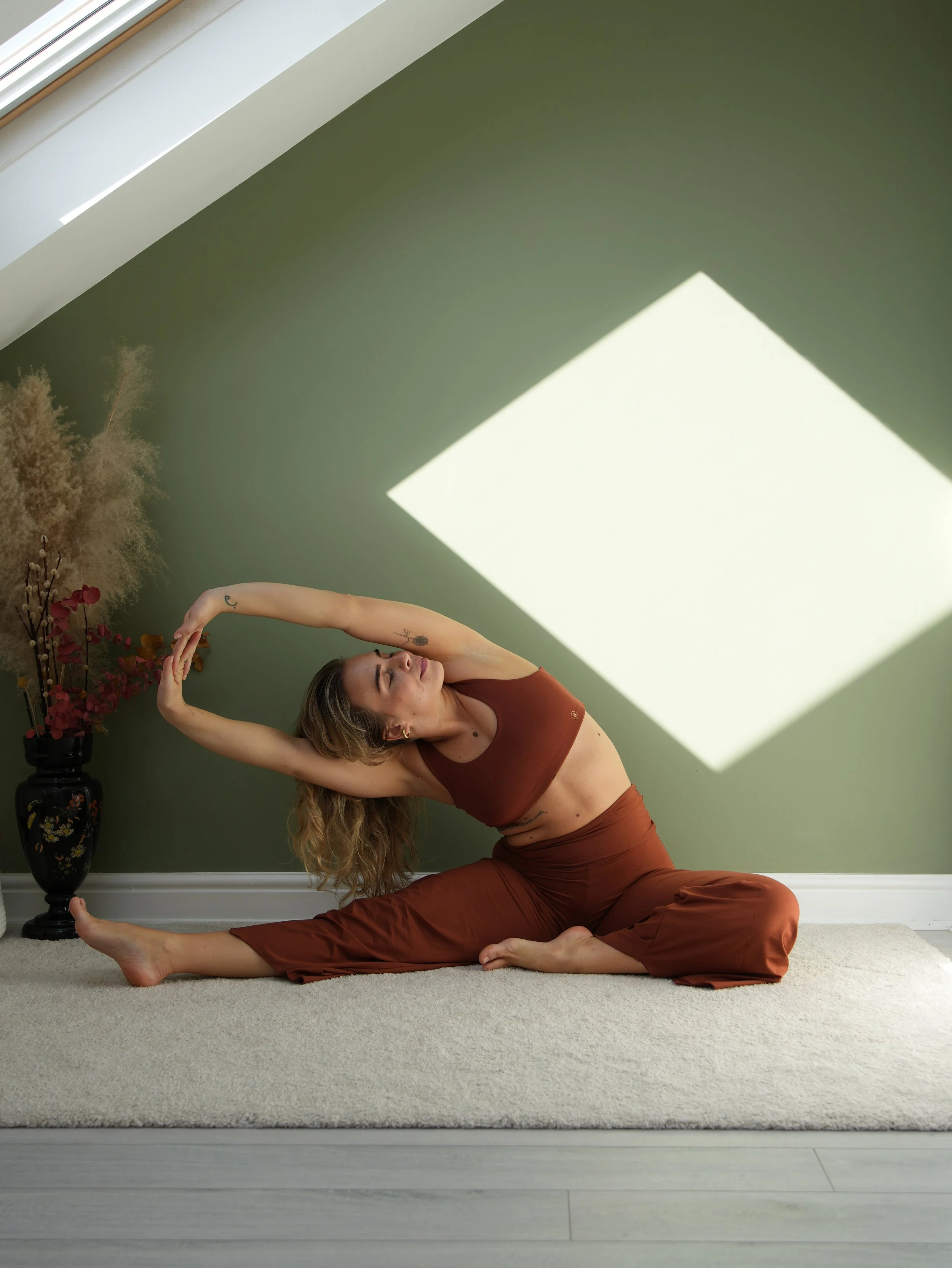
When Rest Isn’t Lazy – It’s Powerful!
We’re conditioned to glorify busy, but what if true strength lies in slowing down?
In this post, I explore the quiet power of rest, why it isn’t lazy, and how you can start honouring it—guilt-free.
We live in a world that celebrates hustle, productivity, and constantly doing more. And while there’s nothing wrong with ambition or goals, there’s something deeply nourishing – even radical – about choosing rest.
Not the kind of rest that’s sandwiched between tasks or squeezed into a day because we’re too exhausted to continue… but real, intentional, powerful rest. The kind that says, “I am worthy, even when I’m not doing.”
Rest is not weakness
For so many of us, especially women, rest has been tangled up with guilt.
We’ve been taught to earn it, to justify it, or to make it ‘productive’ – like ticking off a wellness to-do list. But real rest doesn’t need to be earned. It’s a basic need, a cycle we’re meant to honour.
I’ve been thinking a lot lately about what it means to slow down.
Not just in terms of movement, but in my inner world. The pace of my breath, the weight of expectations, the endless “shoulds” that sneak into even the quietest moments.
Here’s what I’ve learned:
You don’t need to prove your worth through exhaustion.
You don’t need to do more to deserve a break.
You don’t need to wait until burnout to finally stop.
Rest can be:
Saying no without guilt
Taking a nap in the middle of the day
Lying on the floor and breathing
Logging off, turning inward
Doing nothing – and letting that be enough
Try this: a 2-minute breath + body softening practice
Wherever you are, take a moment to pause.
Let your shoulders drop.
Loosen your jaw.
Feel your breath move through your body – slow, steady, soft.
With every exhale, imagine your body sinking just a little more.
There’s nowhere to go. Nothing to fix.
This moment is enough.
Remember:
You are allowed to rest.
You are allowed to not explain why.
And that rest, that pause, might just be the most powerful thing you do today.